Author: David Schlosser
I like art, monsters, and oxford commas.
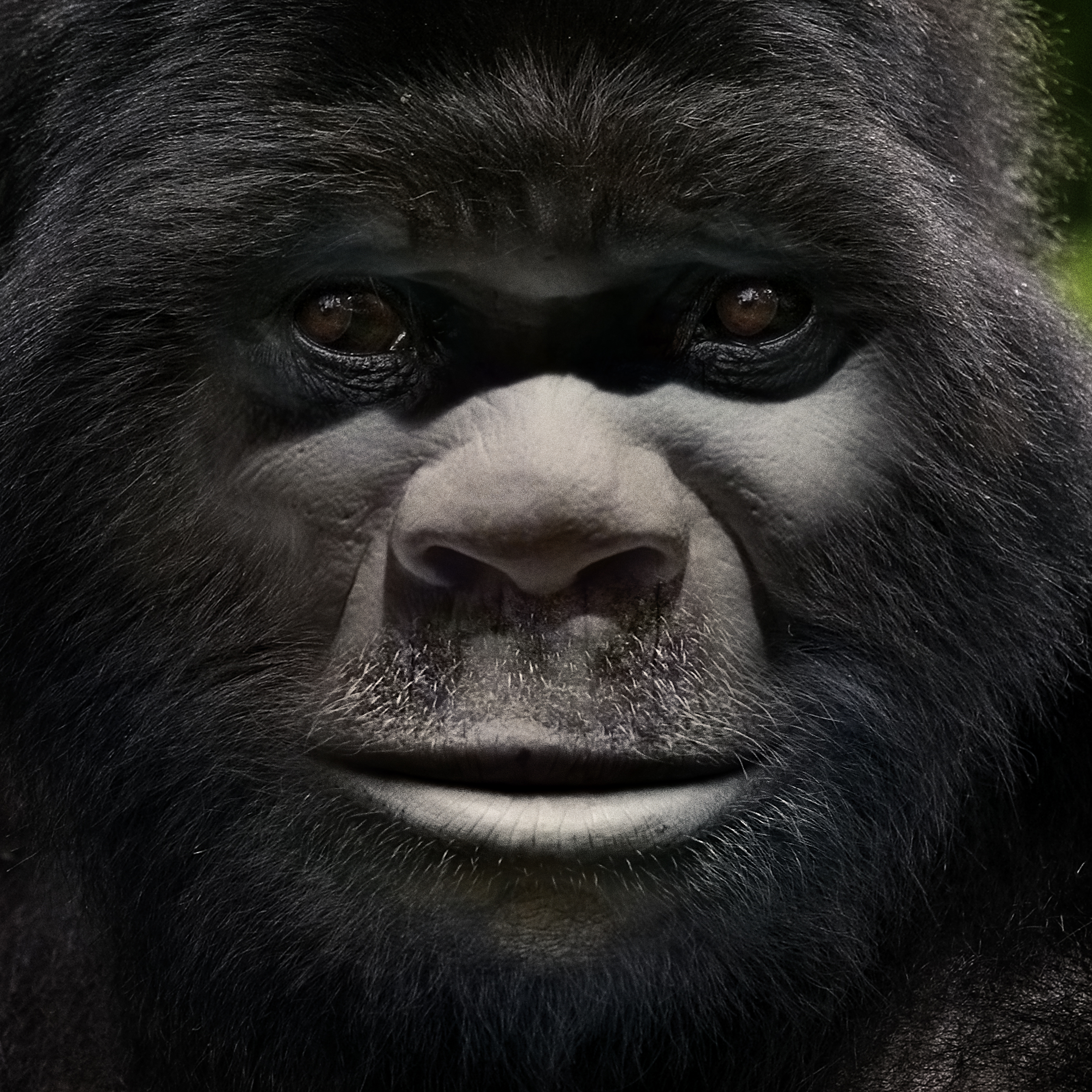
The Patterson-Gimlin Film. 50 Years.
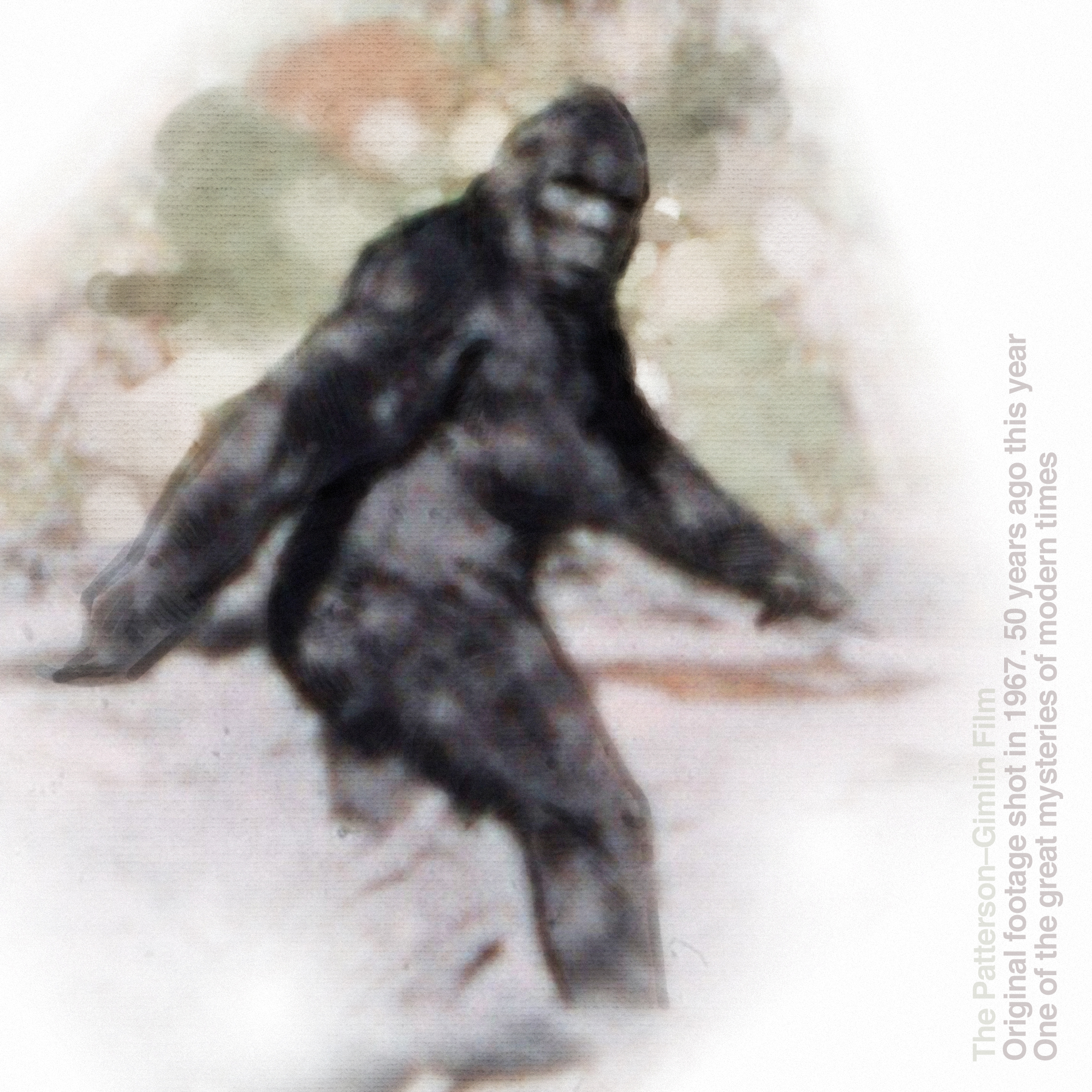
There’s a lot of information proving the PGF is real. But if what you want is proof that it’s not a hoax, then you should read this essay on the complete failure to debunk the film or prove it is a hoax » Read Essay
Bigfoot411 | The Florida Skunk Ape
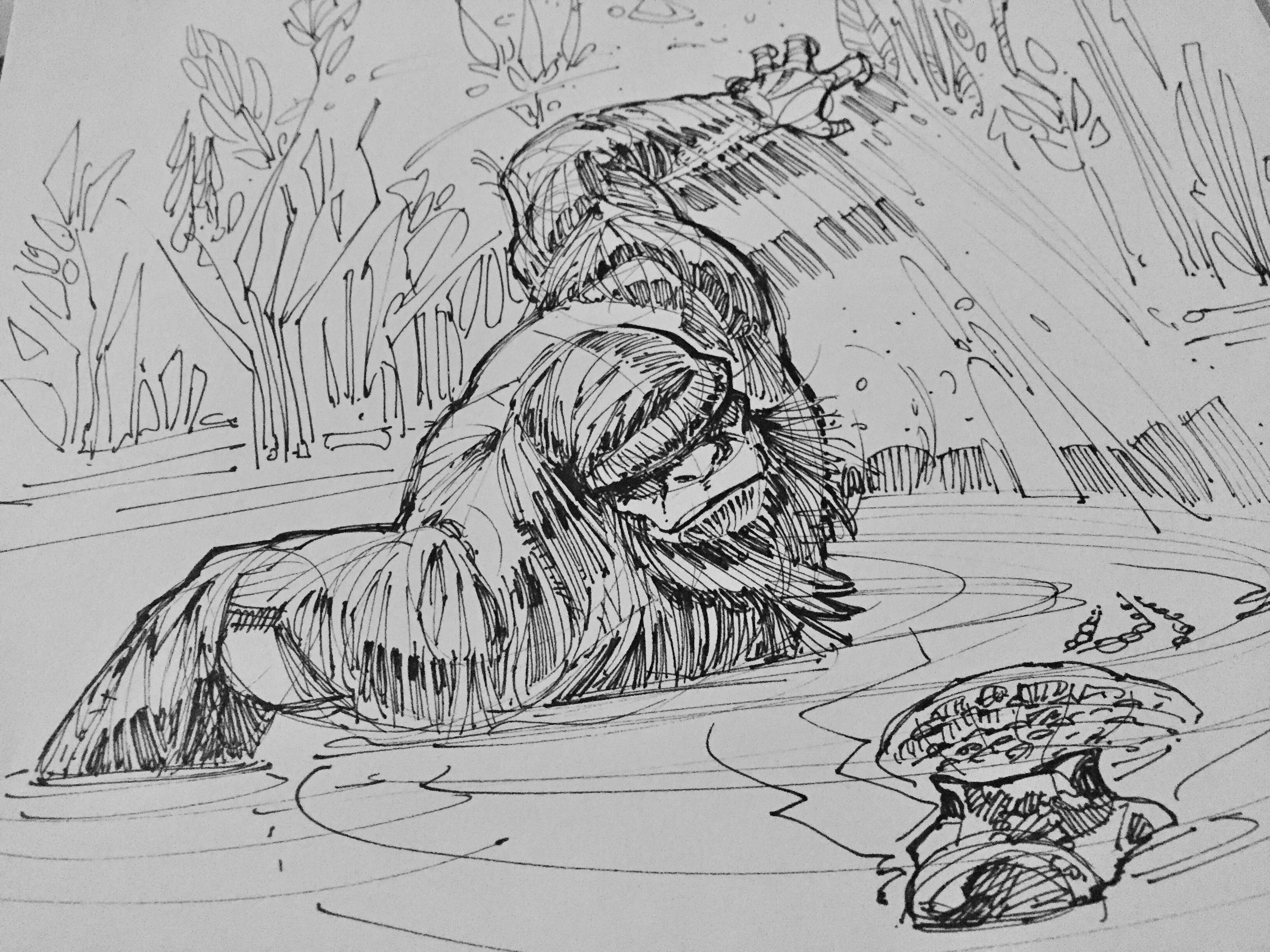 For complete descriptions of the different types of Bigfoot, checkout: www.bigfoot411.com
Bigfoot Face 52

The Genoskwa. A type of bigfoot mentioned in Native American folklore.
Bigfoot411

Information is a flash of light creating a bigfoot silhouette. bigfoot411.com
Bigfoot Face 51
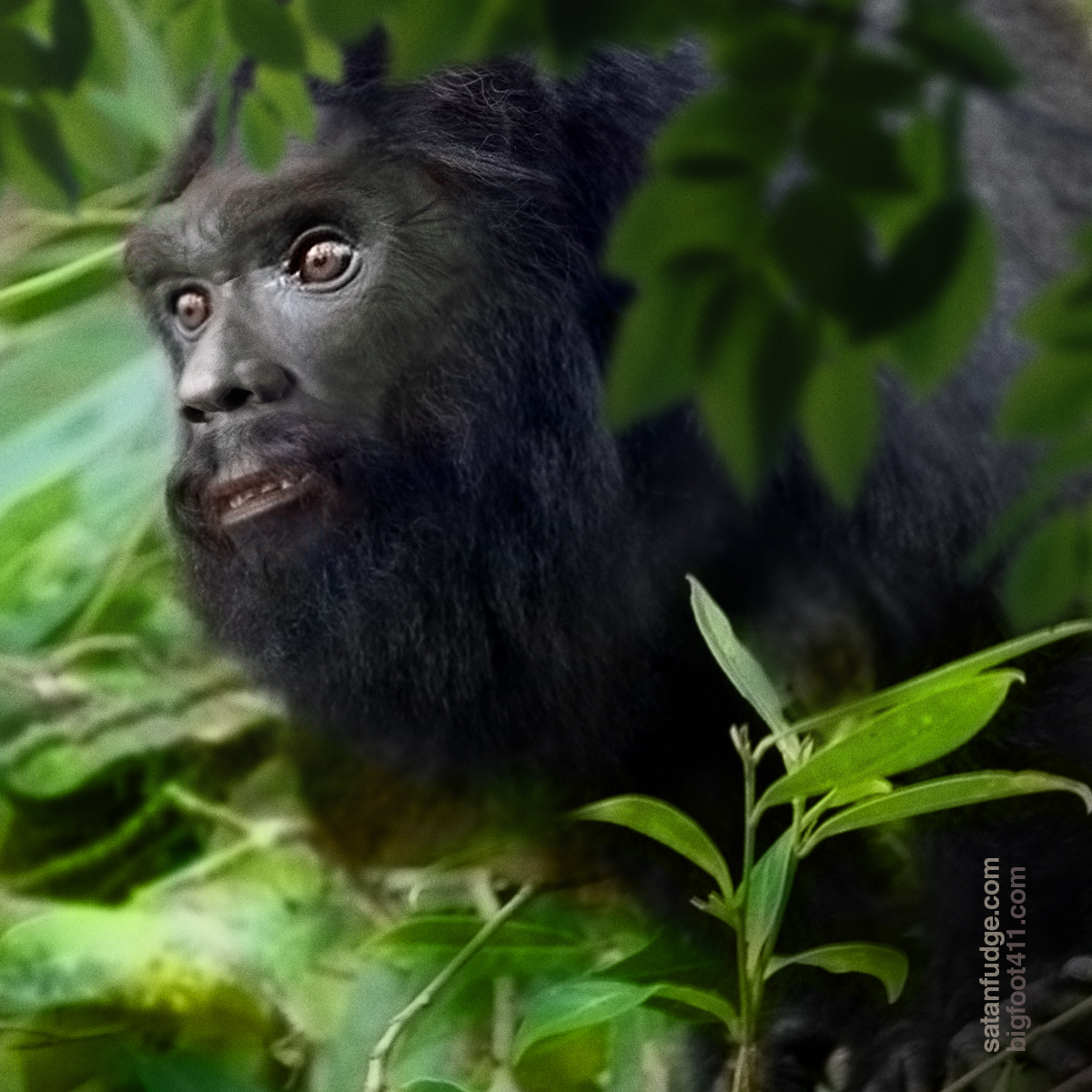
Bigfoot411 | Type 1 Bigfoot
The Type 1 bigfoot, A.K.A. The Patty-type. This is the classic Sasquatch. It looks like a cross between a human and a Mountain gorilla (link) It has a large, powerful build, and thick, broad chest.
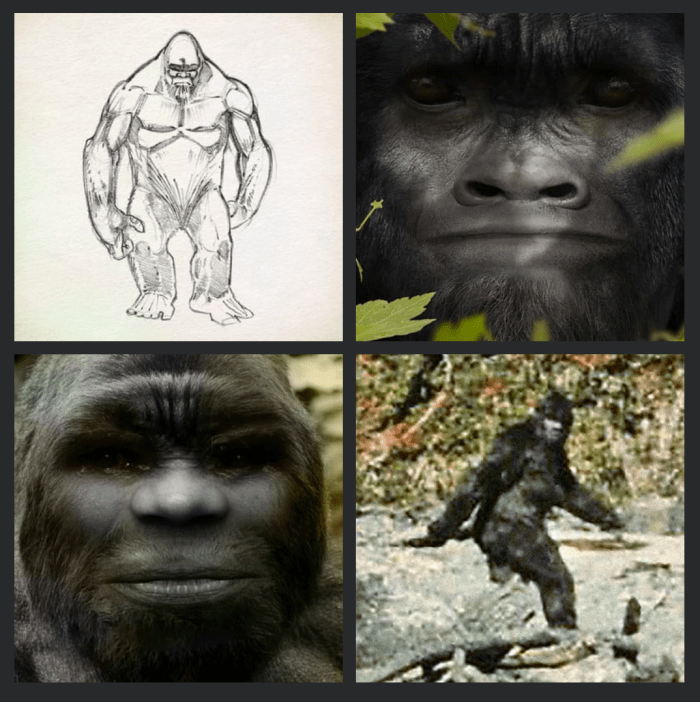
Usually reported with black hair and gray skin. Other hair colors reported are cinnamon, and occasionally white. The head, though massive, has been described as relatively small for the body. Type 1s sometimes develop a sagittal crest which can look like a person wearing a hoodie. They have a conspicuous brow ridge with a receding forehead, giving the eyes a deep-set look. The eyes are hard to see but have been reported to be proportionately further apart than a human’s eyes. Type 1s have a flat face with prominent cheekbones. A square jaw. The mouth region is only slightly protuberant. The nose is near human in shape, though “pug” or flat, sometimes with forward-directed nostrils. The height average for the sampled population is 7’ 10, however, alpha males have been reported at 9′ and larger. The average Type 1 is estimated to weigh 650 lbs.
For more bigfoot info, check out: www.BIGFOOT411.com
The Florida Skunk Ape

Skunk Ape sightings are reported throughout Florida. 7 to 9 Skunk Apes are estimated to live in the Everglades area. The highest concentration of sightings is in the Florida Everglades. Big Cypress National Preserve offers the best opportunity for researchers to locate Skunk Apes. Often times Skunk Apes are sighted in close proximity to large cities. In one instance a Skunk Ape reportedly ran across I-75 in broad daylight. Source: Dave Shealy. Skunk Ape Headquarters
For more bigfoot info, check out: www.BIGFOOT411.com
Type 2 Bigfoot Face 50
What if a species of bigfoot did not get to America via the Bering land bridge?
What if it lived in South America for tens of millions of years, then made its way north sometime over the last 15 million years? Well, it might look like the Type 2 Bigfoot. This scenario might explain why they are most often reported in the south.
Check out these two videos by Bob Gymlan. He presents a good argument for an ape in America growing so large:
1 – Sasquatch in the Americas, a Pre-History
2 – Best Bigfoot Candidate: Dryopithecus
This is a modified version of Danny Vendramini’s “Them and Us” Neanderthal. Modifications: Round pupils. New world monkey nose. Pronounced canines. Here is some more info about the different types of Bigfoot: www.bigfoot411.com

The original Neanderthal reconstruction images were created by Arturo Balseiro exclusively for Them and Us.org. They are copyright 2009: them and us.org
His work is amazing: http://dharmaestudio.wix.com/arturo-balseiro
Original Image courtesy of themandus.org | Copyright: themandus.org | Original Neanderthal reconstruction courtesy of themandus.org
Bigfoot Family Tree
Why are there multiple species and subspecies of bigfoot?
This (below) is an effort to visualize an answer to that question. This is, obviously, not based on science.
Premise: There are gaps in the story of primate evolution. Those gaps could contain undiscovered intergeneric, and interspecific primate hybrids. The gaps could contain uncatalogued families, genera, or species that each exhibit a novel combination of adaptations. So we can imagine that If the gaps contained these animals, then any, or all of them could fit the generic description of
What you’re looking at: There are reports of different types of bigfoot. Descriptions of the different types are the starting point for this project. Then — moving backwards — evolutionary lineages were invented to match modern descriptions. This is not based on actual physical anthropology, primatology, archaeology or any other natural science — however — it is inspired by two existing concepts:
1. Hybrids: “Research suggests that hybridization sometimes ignites helpful evolutionary changes. An initial round of interbreeding — followed by hybrid offspring mating among themselves and with members of parent species — can result in animals with a far greater array of physical traits than observed in either original species. Physical variety in a population provides fuel for natural selection, the process by which individuals with genetic traits best suited to their environment tend to survive longer and produce more offspring.”[Source: Bruce Bower, Science News 2016]
2. Novel Adaptations: All primates have the same adaptive toolkit. Different adaptive tools are used to manage different circumstances. Over time, primates change as a result of the adaptive tools they use. “Novel adaptations” refers to previously unobserved collections/combinations of adaptations. Example: Bipedalism and Hooded Noses in a genus of primate other than Homo.

IMPORTANT:
It is obvious, but I’ll say it anyway: This chart is not based on science. I am not a scientist and I do not take lightly the genius and efforts of actual scientists. Also… bigfoot is a real thing. It is mired in hoaxes and pseudoscience, but it is a real thing regardless. This illustration is not a contribution to the pseudo-scientific quagmire it’s just a thing I did for fun.
Bigfoot Face 49
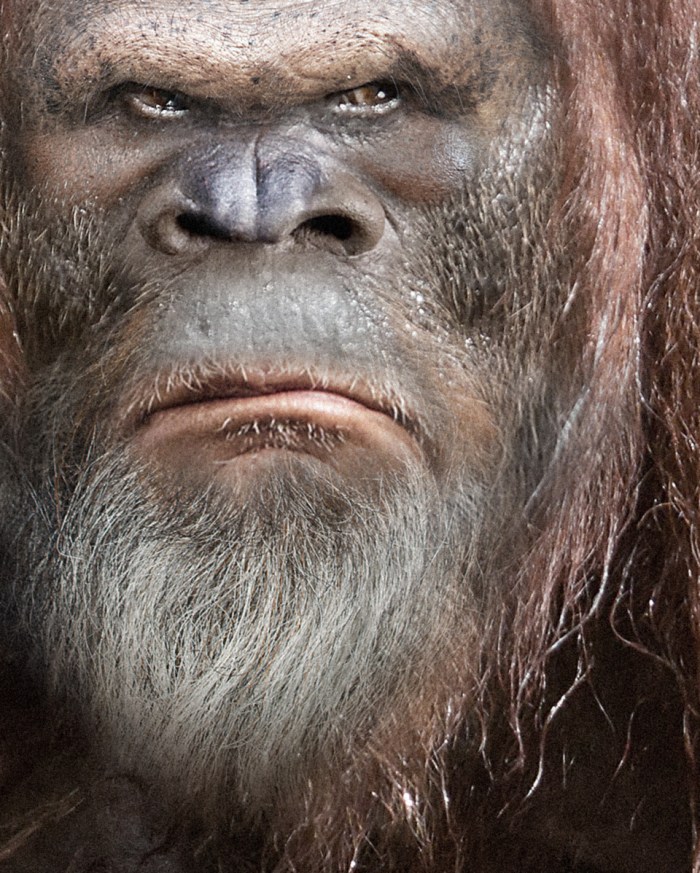
Bigfoot Face 48

Bigfoot Face 47

Bigfoot Face 46
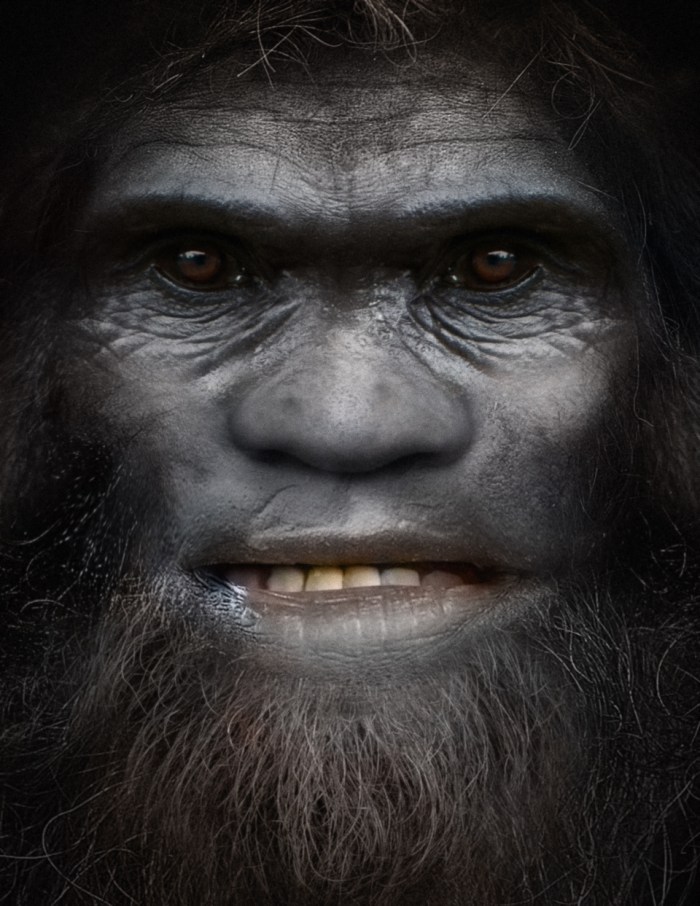
Bigfoot Face 45

Bigfoot Face 44
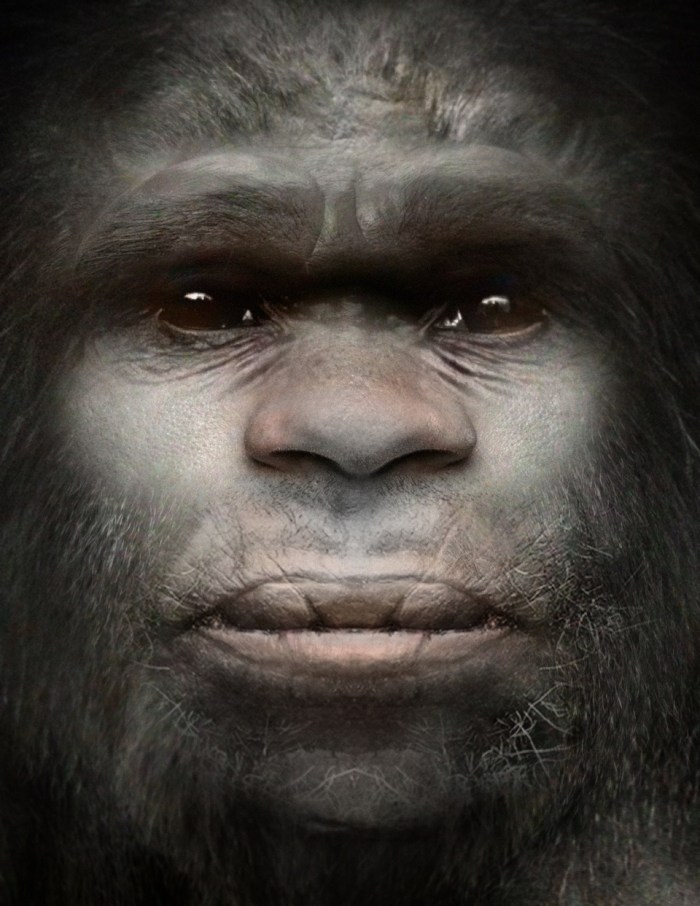
Bigfoot Face 43

Bigfoot: A novel species of primate. Possibly an extant hominin.
Bigfoot Face 42
 Bigfoot: A novel species of primate. Possibly an extant hominin.
bigfoot-face-41
 Bigfoot: A novel species of primate. Possibly an extant hominin.
bigfoot-face-40
Bigfoot Face 40

Bigfoot: A novel species of primate. Possibly an extant hominin.
bigfoot-face-39
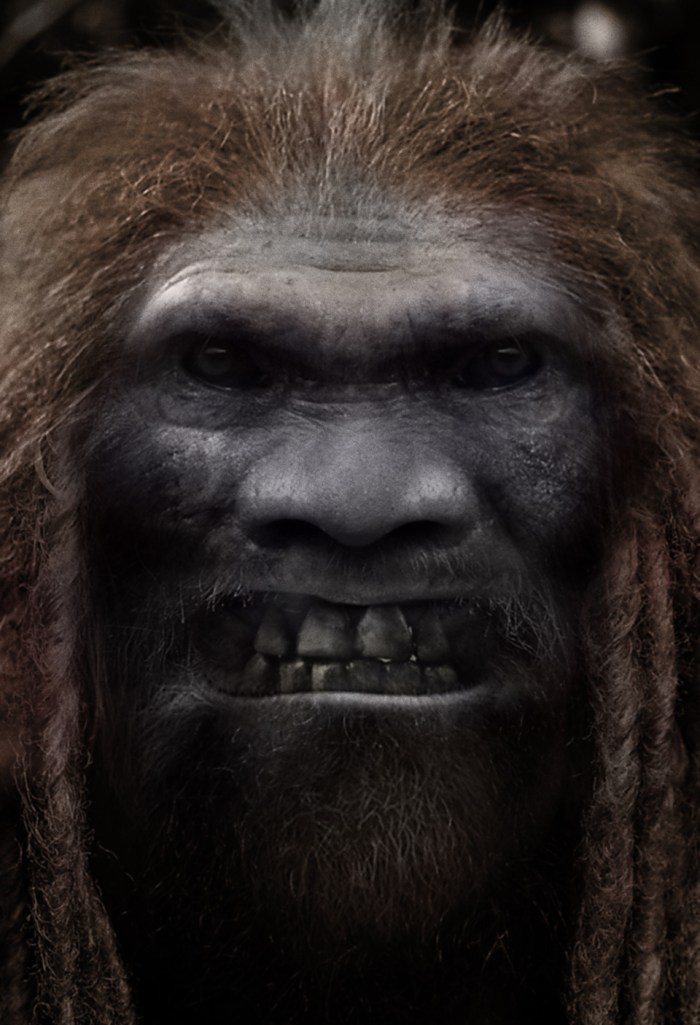
Bigfoot: A novel species of primate. Possibly an extant hominin.
 SATANFUDGE
